Showing posts with label traffic. Show all posts
Showing posts with label traffic. Show all posts
I remember the first time I saw the movie Premium Rush, I
was left completely fascinated by the idea of riding a fixed gear bike. I
mean, riding without brakes, not being able to coast, weaving through
peak hour traffic, sounds like something that someone with a death wish
would do. But then, what bigger adrenaline rush can you get if not this!
After a lot of pondering over whether I should get myself a Pure Fix, I decided to take the plunge on the 21st of May and gift myself a sweet looking Pure Fix Juliet and a pair of gold wheels on my birthday.

The frame of the bike is made up of high tensile steel and the stock grips did a good job at dampening out the road vibrations to a good extent (I do wear gloves when I ride my bike). Also, Pure Fix has done a great job with the frame geometry – neither too aggressive not too upright. The shoulders were not over-stressed and the wrists and elbows were in a relaxed position throughout the ride. Besides that, the bike felt responsive and alive and the 44/16T gear ratio ensure the bike was adequately geared for the varied terrain one generally comes in our city.
The other point of note was the lack of a rear brake (the Pure Fix comes with only with a default front brake). The lack of a rear brake when riding single speed is actually quite unnerving and I definitely recommend installing a rear brake to commute safe on city roads.
 The first thing I did the next day when I reached BUMSONTHESADDLE was to change my rear wheel to the fixed gear mode (approx. after 22 kilometers of riding in single speed mode).
I needed the confidence that it would provide when it comes to having
rear braking ability and since I had decided not to get myself a pair of
rear brakes (for me, the beauty of a Pure Fix lies in its
simplicity. And having an additional rear brake set on it just didn’t do
justice to how I see that bike).
The first thing I did the next day when I reached BUMSONTHESADDLE was to change my rear wheel to the fixed gear mode (approx. after 22 kilometers of riding in single speed mode).
I needed the confidence that it would provide when it comes to having
rear braking ability and since I had decided not to get myself a pair of
rear brakes (for me, the beauty of a Pure Fix lies in its
simplicity. And having an additional rear brake set on it just didn’t do
justice to how I see that bike).
Immediately I could feel the difference in stopping power. Yes, it does take time to get used to the fact that you cannot afford to coast on a fixed gear bike. But then, its actually turned out to be so much more fun! The heightened sense of awareness, the thrill in trying to manouver through traffic while not keeping a foot down and the joy derived from constant pedalling no matter how the legs feel ; Its like magic! I actually felt more in control of the bike when riding in fixed gear mode than when it was in single speed! In simple terms, riding a fixed gear bike is like trying to tame a wild animal. It does take some time, but at the end of the day, its worth the effort once you get the hang of it. Will I opt to go back to riding it as a single speed? never ever ever never!
I’ve been commuting extensively with this bike and with each passing day I end up falling more in love with it.
Oh yeah, one more thing – the attention one ends up getting while pedaling down the streets on one of these beauties! From people on two wheelers to smoke spewing BMTC busses, their looks say it all. You know you have one hell of a good looking bike! ;)

resource ::
http://blog.bumsonthesaddle.com/2015/06/14/review-pure-fix/
After a lot of pondering over whether I should get myself a Pure Fix, I decided to take the plunge on the 21st of May and gift myself a sweet looking Pure Fix Juliet and a pair of gold wheels on my birthday.

Fixed or Single Speed?
Q. What are fixed gear bikes?As stated on wikipedia – Most bicycles incorporate a freewheel to allow the pedals to remain stationary while the bicycle is in motion, so that the rider can coast, i.e., ride without pedaling using forward momentum. A fixed-gear drivetrain has the drive sprocket (or cog) threaded or bolted directly to the hub of the back wheel, so that the rider cannot stop pedaling. When the rear wheel turns, the pedals turn in the same direction. This allows a cyclist to apply a braking force with the legs and bodyweight, by resisting the rotation of the cranks.For someone who has always been used to the idea of coasting on the bike, riding fixed seemed like a strict no-no. The Pure Fix original series bikes come with both fixed gear and freewheel riding options. It takes a simple flip of the rear wheel to switch between the two modes. I had dabbled with the idea of riding my commute in fixed gear mode but Bangalore traffic made me think twice about this. So I initially setup the bike in single speed mode.
The first ride
The first thing you notice when you ride a single speed bike is the absence of gears (duh!). Those short nagging inclines on which you typically shift down and cruised leisurely start demanding that extra bit from you. Initially, there is some involuntary reaching out to gear levers only to find yourself grabbing thin air! But then, to be honest, the feeling you get trying to power through those sections of the road (or those flyovers) in the city is so very fulfilling!The frame of the bike is made up of high tensile steel and the stock grips did a good job at dampening out the road vibrations to a good extent (I do wear gloves when I ride my bike). Also, Pure Fix has done a great job with the frame geometry – neither too aggressive not too upright. The shoulders were not over-stressed and the wrists and elbows were in a relaxed position throughout the ride. Besides that, the bike felt responsive and alive and the 44/16T gear ratio ensure the bike was adequately geared for the varied terrain one generally comes in our city.
The other point of note was the lack of a rear brake (the Pure Fix comes with only with a default front brake). The lack of a rear brake when riding single speed is actually quite unnerving and I definitely recommend installing a rear brake to commute safe on city roads.
Fixed gear mode : Activated

Immediately I could feel the difference in stopping power. Yes, it does take time to get used to the fact that you cannot afford to coast on a fixed gear bike. But then, its actually turned out to be so much more fun! The heightened sense of awareness, the thrill in trying to manouver through traffic while not keeping a foot down and the joy derived from constant pedalling no matter how the legs feel ; Its like magic! I actually felt more in control of the bike when riding in fixed gear mode than when it was in single speed! In simple terms, riding a fixed gear bike is like trying to tame a wild animal. It does take some time, but at the end of the day, its worth the effort once you get the hang of it. Will I opt to go back to riding it as a single speed? never ever ever never!
I’ve been commuting extensively with this bike and with each passing day I end up falling more in love with it.
Oh yeah, one more thing – the attention one ends up getting while pedaling down the streets on one of these beauties! From people on two wheelers to smoke spewing BMTC busses, their looks say it all. You know you have one hell of a good looking bike! ;)
The good

- Well designed frame geometry – Responsive and comfortable! Perfect for riding inside the city.
- The 44/16T gear ratio is ideal for riding around within the city limits. Neither is it way too hard to pedal up those city flyovers, nor do you find yourself spinning out on flat stretches.
- The high tensile steel does a good job at adequately dampening out road vibrations.
- The deep dish wheels are literally bomb proof and can handle our Indian roads very well. They tend to stay true for a longer time than regular road bike wheels.
- The Wellgo aluminium pedals are of real good quality! Something that caught me completely unawares when I bought this bike. Broad base with pins to provide that extra grip one needs while riding fixed.
- Looks! For someone like me who is very particular about how their bike looks, Pure Fix have done a fantastic job at coming up with gorgeous looking bikes that can be customized to a great extent. From bullhorn handlebars and coloured wheelsets to coloured bartape, chains and saddles. You can do a lot to jazz up your bike just the way you want.
- Fantastically priced!
The not-so-good
- My front brake pads wore off within fifteen days of riding my bike. I would recommend everyone to get a pair of koolstop brake pads along with the bike. They are very competitively priced brake pads and offer excellent stopping power while being durable.
- The bike is designed keeping the urban commuter in mind. If you intend to use it for longer distances a nice saddle upgrade would be worthwhile.
Verdict
The ideal commuter bike that looks great and rides really well for city roads. So be it your go-to bike to head to your workplace or to pick up some stuff from your nearby grocery store, this is all you need. Also, the fixed gear aspect adds another fun dimension to this bike. And for the price tag on it, it surely packs a bang for its buck! All in all, this is one bike I will be riding for a long long time to come.resource ::
http://blog.bumsonthesaddle.com/2015/06/14/review-pure-fix/
PRODUCT REVIEW: PURE FIX FIXED GEAR/SINGLE SPEED BIKES, IF IT AIN’T FIXED, ITS BROKEN

Eating, putting on makeup, talking on the phone — these are all things you shouldn’t do while driving. The first two items can certainly wait until you’re out of the car. But there may be situations where you have no other choice except to take a call on the road. In those cases, using some kind of hands-free calling system is a good idea, and required by law in many states.
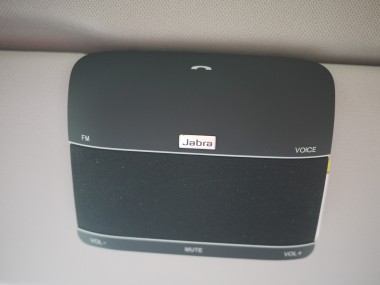
Both devices wirelessly connect to Bluetooth-enabled handsets, so you can talk on the phone while keeping your hands on the wheel. They also understand various voice commands, and can even stream music and GPS directions from your phone to your car’s FM radio. Of the two, the Jabra had better sound quality.
I tested both systems in San Francisco and Los Angeles with the iPhone 4 and Motorola Droid Razr Maxx HD. As soon as I turned on the Jabra, a friendly female voice walked me through the set-up process. It was as simple as turning on Bluetooth on the phones, and selecting the Jabra from a list of supported devices.
It attaches to your sun visor, much like a garage-door opener. There are various buttons — volume, mute, voice, phone and FM — along the top and bottom of the speakerphone system, and you can initiate calls a couple of different ways.
You can press the Voice button and say “redial” or “last call” to dial the last outgoing or incoming call. To dial a specific contact in your address book, you have to say “Phone Commands,” which initiates your smartphone’s voice-recognition system (such as the iPhone’s Siri app), and then you can say, “Call John.” For incoming calls, you can simply say “answer” or “ignore” without having to touch any buttons.
The Jabra understood all my commands, but I found I had to speak very slowly and clearly when trying to dial by name. Still, it allowed me to keep my eyes on the road and my hands on the wheel, whereas before I would be fumbling through my phone and only half-concentrating on the road.
The sound quality was impressive. Whether I was driving on city streets or on the highway, my friends sounded clear and loud. The volume was almost piercing when set to the highest level, so I had to turn it down a couple of notches. Calls were also still audible even when I had the air conditioning on. (It was quite warm in L.A., in case you’re wondering why I had my AC on in January.)
My friends said they could hear me fine, but could tell I was on a speakerphone. Only a couple of people heard some road noise.
One extra feature I liked about the Jabra was the ability to stream songs and GPS directions from my phone to my car’s stereo. You can do so by pressing the FM button, and the Jabra will then scan for an open FM channel. Once it has found one, you can then tune your car radio to the same station and the Jabra will pipe in the audio.
It came in handy when I was using Google Maps to navigate my way to Disneyland this past weekend, and I didn’t have to struggle to hear the directions, like I usually do when I’m just using my iPhone.
The Jabra has an estimated battery life of up to 14 hours. The speakerphone has a motion sensor that detects when you leave or enter the car, so it will automatically power down when you’re gone and reconnect once you’re back in. A car charger is also included in the box.
The Motorola Roadster 2 offers many of the same features as the Jabra, including the FM transmitter and voice commands. It’s also equipped with motion sensors to help conserve battery life, which is estimated at up to 20 hours. All functions worked well in my testing, though I had the same issue with voice dialing: I had to speak slowly and clearly in order to get it right.

There is also a free Motospeak app that you can download to your smartphone. It allows you to listen to and dictate text messages through the speakerphone, but it’s currently only available for Android devices.
I installed it on the Droid Razr Maxx HD, and when a new text message arrived, the Motorola Roadster 2 announced who sent the message and asked me if I wanted to listen it now. After I replied “yes,” it read the message in a somewhat robotic — but still understandable — voice.
You can dictate a reply, but the results were never 100 percent accurate. In one case, I said, “Sure, let’s meet at 5 at Roam Burgers” and the Motorola wrote, “Sure, let’s meet at 5 at Wilburger.”
I think the app is fine for listening to text messages, but writing one was almost as distracting as doing it right from your phone.
My biggest issue with the Motorola was sound quality. It has a smaller speaker than the Jabra and, as a result, the audio doesn’t sound as full or rich as the Jabra. Instead, voices sounded tinny or as if they were coming through a cardboard tube. Turning up the volume made voices sound muffled. My friends on the other line noticed some background road noise, but it wasn’t a major issue.
If you need to make calls from the road, an in-car Bluetooth speakerphone can help make the task easier. The Jabra Freeway and Motorola Roadster 2 are two solid systems, but the Jabra drives away with the win, thanks to its excellent sound quality.
In-Car Bluetooth Speakerphones That Let You Wheel and Deal

Everybody knows the Yamaha already launch the Sport Bike in
250cc class. But is everybody know how well this bike on the track? Is it stiff
? How this bike accelerate ?
The only thing that we can do is battle it with the old
player in 250cc class, "The Kawasaki Ninja 250FI".
With similar machine specification, 2-cylinder DOHC 8 valve.
Let see the results!


Riding Position
Sitting in the seat are both fairly similar, although the
use handlebar clamp but it still has a comfortable sitting position. Not too
stiff for daily use.
The difference in R25 owned flatter handlebars, while Ninja
slightly bend downward.
The R25 has narrow and high tank, different with Ninja with medium
low and wide tank, but both of them are still equally comfortable. The next
difference is R25 soft rear suspension.
Handling and Performance
Let discuss about the handling. With a weight of only 166 kg
and the average distribution of 50:50 front-rear, R25 lighter and more agile to
maneuver, especially the angle turn the handlebars only 34 °. Ninja 250FI are a
lot heavier, with a weight reach 172 kg with a slightly wider turning radius.
When throttled up, R25 still win for this, because the 25 ° rake
angle and the 95 mm trail, makes it turning and maneuver so easily and accurate.
Ninja who had 27 ° rake angle and 93 mm trail, it took extra effort to take this
beast turn in the same speed, but you will get much and much comfortable when you
meet straight path.
The Characteristic of the suspension also influence to
handling, the rear suspension of R25 Mono cross are very soft, at high speed
rear wheel of R25 can easily moved. Differences with Ninja, uni-track mono
shock got slower compression but rebounded quickly, it makes you get a great
stability but when you met a bumpy road you will get shocked when you riding
Ninja.
About the performance, measured power on Dynojet 250i
dynamometer owned by Sportisi Motorsport Indonesia. Power of R25 reach 29.43 hp
/ 12,100 rpm and a torque of 19.2 Nm / 10,200 rpm. Medium Ninja 250FI 26.21 hp
/ 10,800 rpm and 17.87 Nm / 10,000 rpm. You can see it in the graph of dyno
results below.

As expected from the dyno test , we are trying to test it in
real condition. Ninja can only offset in the initial attraction 0-60 km / h
with a time of 3.1 seconds, after the R25 left with a gap between 0.2 to 0.5
seconds. You can see the details below. R25 Top speed was best to 170 km/h ,
the Ninja is only 161 km/h.
Acceleration Data
0-60 km / h: 3.1 seconds
0-80 km / h: 4.7 seconds
0-100 km / h: 7 seconds
0-100 m: 6.3 seconds
0-201 m: 9.7 seconds
0-402 m: 15.5 seconds
Tested Top speed: 158.4 km / h
0-60 km / h: 3.1 seconds
0-80 km / h: 4.9 seconds
0-100 km / h: 7.5 seconds
0-100 m: 6.4 seconds
0-201 m: 9.9 seconds
0-402 m: 15.7 seconds
Tested Top speed: 153.6 km / h
Gasoline consumption
Had the same engine configuration, the 250 cc 2-cylinder
DOHC 8 valve petrol supply injection and liquid-cooled. Bore x stroke both
overbore make better play at high rpm, then do not be surprised gasoline
consumption is quite greedy.
Both bike used daily on the streets of Jakarta (writer from Indonesia), with varying
road conditions produce gasoline consumption is not much different. R25 22.7 km
/ lt, while Ninja 250FI 21 km / lt.
Conclusion
If you are looking for comfort and stable riding for straight path area
you can pick the Ninja 250 FI as a great Beast, but if you are looking
for a bike for maneuvering racing Yamaha (Revs your Heart ) is the only candidate.
That's is our opinion. How about your opinion ?
source : www.motor.otomotifnet.com
Kawasaki Ninja 250 FI VS New Yamaha YZF-R25
Subscribe to:
Posts
(
Atom
)
